
Най-важното:
● Кои са симптомите на аритмия?
● Какво да правим при съмнение за аритмия?
● Какви могат да бъдат причините за поява на аритмия?
● Кои са рисковите фактори за възникване на аритмия?
Аритмията е състояние, при което се наблюдава неравномерен сърдечен ритъм. Има различни видове:
● брадикардия - под 60 удара в минута;
● тахикардия - над 100 удара в минута;
● преждевременен удар - ударът настъпва прекалено скоро след предния и се усеща пауза преди следващия;
● надкамерни аритмии - такава е най-често срещаната аритмия - предсърдно мъждене, която може да предизвика над 400 удара в минута;
● камерни аритмии.
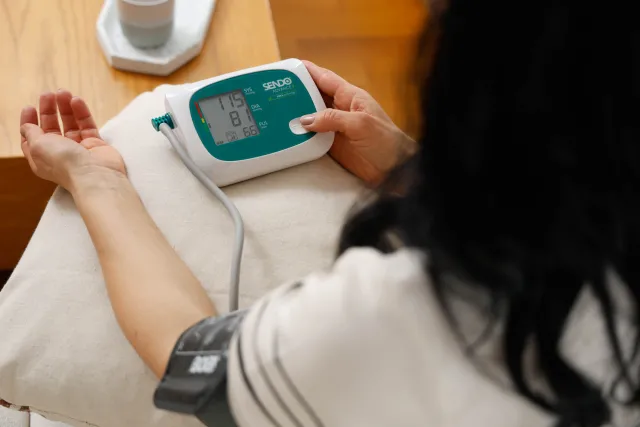
За проследяване на сърдечната дейност и пулса в домашни условия използвайте апарати като SENDO Advance 3 с технология HIRA. При съмнение за аритмия, консултирайте се с лекар. Тук ще ви запознаем как да разпознаете аритмията и какви рискови фактори има за това нарушение.
Симптоми на аритмия
Понякога аритмиите остават скрити и безсимптомни. Някои симптоми на аритмия могат да бъдат неспецифични и да наподобяват друго заболяване. Те включват:
● трептене, сърцебиене, усещане за пропускане на сърдечен удар;
● силни удари в гръдния кош;
● замайване, световъртеж, дори припадък;
● недостиг на въздух;
● болка или стягане в сърдечната област;
● слабост и умора;
● тревожност;
● замъглено зрение;
● изпотяване.

При съмнение за аритмия
Понякога аритмията е безсимптомна и се открива при профилактичен преглед. Ако имате съмнения или симптоми на аритмия, направете консултация със специалист. Прегледът за наличие на аритмия включва задълбочен разпит относно симптомите и начина ви на живот. Това ще помогне за откриване на рискови фактори за сърдечно-съдови болести. Множество тестове се използват за диагностика на аритмии:
● Кръвни изследвания - следят се нивата на електролити (например калий) и хормони на щитовидната жлеза;
● Електрокардиограма (ЕКГ) - това е най-често използваният тест. Той записва сърдечната функция и ритъм. Може да се проведе в покой или с натоварване. Холтер-ЕКГ е метод за мониториране на сърдечната дейност за по-дълго време (денонощие);
● Електрофизиологично изследване - за измерване на електричната активност на сърцето;
● Генетично изследване - препоръчва се при семейна история на ранни сърдечно-съдови заболявания;
● Методи за изобразяване на сърцето - откриват дефекти в структурата му.
Причини за аритмия
Причините за възникване на аритмия са разнообразни. Някои от тях я предизвикват при наличие на рискови фактори. Такива тригери са:
● Високи или ниски нива на кръвната захар;
● Някои вещества като кофеина, наркотиците и определени медикаменти;
● Дехидратация;
● Ниски нива на електролити - калий, магнезий, калций;
● Физическо натоварване;
● Психо-емоционален стрес, тревожност, гняв;
● Повръщане и кашляне.
Познаването на тези отключващи фактори е важно, тъй като тяхното избягване може да предотврати отключването на аритмия.
Рискови фактори
Индивидуални особености
Напредналата възраст и генетичната предразположеност играят важна роля в развитието на аритмия. Рискови фактори са и някои навици от ежедневието - злоупотреба с алкохол, тютюнопушене, употреба на наркотични вещества.
Съпътстващи сърдечно-съдови проблеми
Сърдечни заболявания като сърдечна недостатъчност, инфаркт, кардиомиопатия, високо кръвно налягане и други увеличават риска за възникване на аритмия. Предходни сърдечни операции също са рисков фактор. Хората с вродени сърдечни дефекти също трябва да проследяват сърдечния си ритъм.
Болести на щитовидната жлеза
Хормоните на щитовидната жлеза регулират сърдечната дейност. При ниски или високи техни нива може да се наблюдава аритмия.
Сънна апнея
Сънната апнея е състояние, при което дишането по време на сън се прекъсва. Това може да доведе до брадикардия и неритмична сърдечна дейност.
Аритмията е лечимо състояние, ако бъде диагностицирана и лекувана навреме. Лекарите препоръчват редовно следене на показателите на сърдечно-съдовата система. SENDO Advance 3 е напълно автоматичен дигитален апарат за измерване на кръвно налягане, който съчетава висока клинична точност с лесна употреба. Създаден специално за домашни условия, уредът използва патентованата технология HIRA (Heartbeat Irregularity Rate Analysis) за разпознаване на нарушения в сърдечния ритъм (аритмии). Благодарение на тези функции, човек може да разчита на обективни и надеждни резултати при всяко измерване. Следете сърдечния си ритъм редовно и отговорно!
ЧЗВ:
Опасна ли е аритмията?
● Ако аритмията остане нелекувана, може да предизвика увреда на сърцето, мозъка и други органи.
Възможно ли е аритмията да е наследствена?
● Да. Аритмиите са полигенни заболявания, които се отключват при наличие на рискови фактори. Редки са изцяло наследствените аритмии, които засягат млади хора.
Източници:
● https://www.nhlbi.nih.gov/health/arrhythmias
● https://www.webmd.com/heart-disease/atrial-fibrillation/heart-disease-abnormal-heart-rhythm
● https://www.mayoclinic.org/diseases-conditions/heart-arrhythmia/symptoms-causes/syc-20350668
● https://medicover-genetics.com/genetics-of-arrhythmias/
Референции:
(1) https://www.nhlbi.nih.gov/health/arrhythmias An arrhythmia, or irregular heartbeat, is a problem with the rate or rhythm of your heartbeat. Your heart may beat too quickly, too slowly, or with an irregular rhythm. / Arrhythmias that cause a slow, fast, or irregular heartbeat
Bradycardia is a resting heart rate that is slower than 60 beats per minute. Some people, especially people who are young or physically fit, may normally have slower heart rates. If you have a slow heart rate, your doctor can find out whether this is normal for you. Tachycardia is a resting heart rate that is faster than 100 beats per minute. You may also have an irregular heartbeat. A premature or extra heartbeat happens when the signal to beat comes too early. This creates a pause, which is followed by a stronger beat when your heart returns to its regular rhythm. It can feel like your heart skipped a beat. This is a common type of arrhythmia, and it can cause other types of arrhythmias.
Supraventricular arrhythmias This type of arrhythmia starts in the atria or the gateway to the lower chambers. Ventricular arrhythmias Ventricular arrhythmias start in your heart’s lower chambers, called the ventricles. These arrhythmias can be very dangerous and usually require medical care right away. /
Diagnostic tests
An electrocardiogram (EKG or ECG) is the most common test for diagnosing arrhythmias. An EKG records your heart’s electrical activity. Your doctor may do an EKG during a stress test, which records your heart’s activity when it is working hard and beating fast.
Your doctor may also do other tests to diagnose arrhythmias.
Blood tests measure the level of certain substances in the blood, such as potassium or other electrolytes and thyroid hormone.
Monitors for long-term recording include Holter monitors and implantable loop recorders. These record your heart rhythm while you do your normal activities. Holter monitors measure your heart rhythm using a device that is outside of your body and are usually used for short periods of time. For an implantable loop recorder, your doctor will place the device under your skin. The recorder transmits data to your doctor’s office. Implantable loop recorders may be worn for longer periods of time and may help your doctor figure out why you are having palpitations or fainting spells, especially if these symptoms do not happen very often.
An electrophysiology study (EPS), which is performed by an EPS cardiologist, measures the electrical activity of your heart. The doctor threads a wire through a blood vessel to your heart. The wire electrically stimulates your heart and triggers any underlying arrhythmia if you have one. If you have another condition that may raise your risk, an EPS can help your doctor find out your risk of developing arrhythmias. An EPS also allows your doctor to test whether a treatment, such as medicine, will stop the problem.
Tilt table testing may help find the cause of fainting spells. You lie on a table that moves from a lying-down position to an upright position. The change in position may cause you to faint. Your doctor watches your symptoms, heart rate, EKG reading, and blood pressure throughout the test.
Genetic testing can check whether you have a type of arrhythmia that is caused by specific gene. This test is important when one or more of your close relatives has an arrhythmia caused by the same gene or had cardiac arrest.
Heart imaging tests, such as computed tomography (CT) scans or cardiac magnetic resonance imaging (MRI), may check the structure of your heart chambers, show how well your heart is working, look for evidence of scar tissue in your heart muscle, or sometimes may look at your heart arteries.
/ What can trigger arrhythmias?
If you have any risk factors, certain situations may trigger an arrhythmia. These include any situations that make your heart work harder, raise your blood pressure, or cause your body to release stress hormone .
Triggers include:
Blood sugar levels that are too low or too high
Caffeine, illegal drugs, and medicines that make you more alert or increase your energy
Dehydration
Low levels of electrolyte , such as potassium, magnesium, or calcium
Physical activity
Strong emotional stress, anxiety, anger, pain, or a sudden surprise
Vomiting or coughing
Talk to your doctor about your triggers and what you can do to avoid them.
/Arrhythmias are treatable with medicine or procedures to control the irregular rhythms. If not treated, arrhythmias can damage the heart, brain, or other organs. This can lead to life-threatening stroke, heart failure, or cardiac arrest.
(2) https://www.webmd.com/heart-disease/atrial-fibrillation/heart-disease-abnormal-heart-rhythm Arrhythmia Symptoms
An arrhythmia can be silent, meaning you don't notice any symptoms. Your doctor may spot an uneven heartbeat during a physical exam. If you have symptoms, they may include:
Palpitations (a feeling of skipped heartbeats, fluttering, or “flip-flops”)
Pounding in your chest
Dizziness or feeling lightheaded
Fainting
Shortness of breath
Chest pain or tightness
Weakness or fatigue (feeling very tired)
Anxiety
Blurry vision
Sweating
Rapid heartbeat
Slow heartbeat
/Arrhythmia Risk Factors
Things that may make you more likely to have an arrhythmia include your:
Age. The chances go up as you get older.
Genes. Your odds might be higher if a close relative has had an arrhythmia. Some types of heart disease can also run in families.
Lifestyle. Alcohol, tobacco, and recreational drugs can raise your risk.
Medical conditions. High blood pressure, diabetes, low blood sugar, obesity, sleep apnea, anxiety, thyroid disorders, lung disease, and autoimmune disorders are among the conditions that may cause heart rhythm problems.
Environment. Things in the world around you, like air pollution, can make an arrhythmia more likely.
Heart disease. If you were born with a heart disease or have had other heart problems in the past, you're more at risk for arrhythmias.
Previous treatments for heart disease. You're more likely to have arrhythmia if you've had surgeries or other treatments for heart disease in the past.
(3) https://www.mayoclinic.org/diseases-conditions/heart-arrhythmia/symptoms-causes/syc-20350668 Risk factors
Things that may increase the risk of heart arrhythmias include:
Coronary artery disease, other heart problems and previous heart surgery. Narrowed heart arteries, a heart attack, heart valve disease, prior heart surgery, heart failure, cardiomyopathy and other heart damage are risk factors for almost any kind of arrhythmia.
High blood pressure. This condition increases the risk of developing coronary artery disease. It also may cause the walls of the left lower heart chamber to become stiff and thick, which can change how electrical signals travel through the heart.
Heart problems present at birth. Also called congenital heart defects, some of these problems may affect the heart rate and rhythm.
Thyroid disease. Having an overactive or underactive thyroid gland can raise the risk of irregular heartbeats.
Obstructive sleep apnea. This condition causes pauses in breathing during sleep. It can lead to a slow heartbeat and irregular heartbeats, including atrial fibrillation.
Electrolyte imbalance. Substances in the blood called electrolytes help trigger and send electrical signals in the heart. Potassium, sodium, calcium and magnesium are examples of electrolytes. If the body's electrolytes are too low or too high, it may interfere with heart signaling and lead to irregular heartbeats.
Some medicines and supplements. Some prescription medicines and certain cough and cold treatments can cause arrhythmias.
Excessive alcohol use. Drinking too much alcohol can affect electrical signaling in the heart. This can increase the chance of developing atrial fibrillation.
Caffeine, nicotine or illegal drug use. Stimulants can cause the heart to beat faster and may lead to the development of more-serious arrhythmias. Illegal drugs, such as amphetamines and cocaine, may greatly affect the heart. Some may cause sudden death due to ventricular fibrillation.
(4) https://medicover-genetics.com/genetics-of-arrhythmias/ Are arrhythmias hereditary? Yes, arrhythmias can be hereditary, meaning the condition can be passed down from parent to child. Hereditary cardiac disorders have a prevalence of 3% in the population.1 They are considered rare with incidences estimated in the range of 1 in 2,000 to <1 in 10,000 in the general population. However, they account for a large proportion of cases of sudden cardiac death in young people (<35years of age).2 Many of these unexplained sudden deaths occur owing to genetic mutations in genes encoding ion channels or their regulatory proteins.3
Изберете LadyZone като любим източник в Google